
Iran's supreme leader warns US and Israel of retaliation "without geographical restriction" if attacked again
Mojtaba Khamenei told commanders to widen their list of targets. Marco Rubio said Donald Trump had not decided on new strikes, while Iran's foreign minister saw no need to meet the Americans.
By Juan de la Torre, Tehran
3 min read
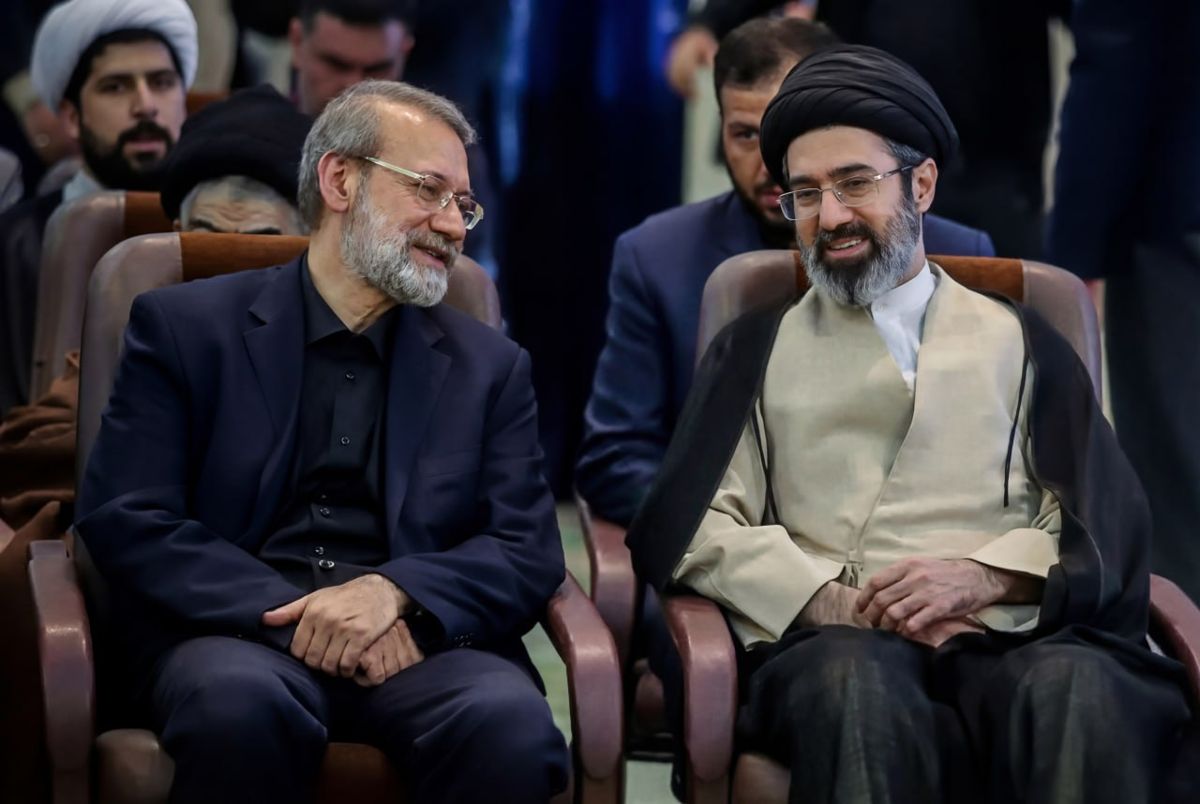
Iran's supreme leader, Ayatollah Mojtaba Khamenei, warned the United States and Israel on Saturday that any new attack on the Islamic Republic would meet "an immediate and effective response, without geographical restriction", in a message to the armed forces reported by Al Jazeera. His office said he had met senior military commanders and given them strategic directives. According to AFP, he ordered them to update their list of targets so that it covers every kind of tangible and intangible American and Israeli asset.
Khamenei has not appeared in public since he succeeded his father, Ali Khamenei, in March. The elder Khamenei was killed on 28 February, the first day of the US-Israeli offensive against Iran. AFP recalls that around 40 days of bombing were followed by a ceasefire in April and a memorandum of understanding in June, but that the truce broke down over the summer.
A warning days before the US midterms
The statement comes three days before the US midterm elections on Tuesday 3 November. Press reports cited by AFP have described a possible short and intense US military campaign after the vote. The Iranian army's spokesman, Mohammad Akraminia, said that if the US president "once more embarks on adventurism", the war would spread across a wider area, according to Al Jazeera. Tehran has already threatened data centres, artificial intelligence systems and undersea cables in the Strait of Hormuz, AFP reported.
Speaking at a G20 press conference in Atlanta, Georgia, the US Secretary of State, Marco Rubio, said President Donald Trump had not yet decided whether to order new strikes, adding that the United States could achieve military objectives if it chose to, AFP reported.
No meeting in sight
Iran's foreign minister, Abbas Araghchi, told Al Jazeera that he saw no need for a meeting with the Americans, in remarks published by the state news agency IRNA and reported by AFP. He said Iran's conditions were clear and were being discussed with mediators.
Qatar is leading that mediation: senior Qatari diplomats held talks in Tehran on Friday. The US vice-president, JD Vance, has sent a letter reportedly addressed to Mohsen Rezaei, head of Iran's Supreme National Security Council. According to Al Jazeera, Tehran is offering to reopen the Strait of Hormuz within days in return for a return to the June memorandum, the lifting of the US naval blockade of Iranian ports and oil sanctions waivers.
Incidents in Hormuz
Iran's Revolutionary Guard said a supertanker carrying more than two million barrels of crude had struck a mine while using a route Tehran does not authorise, the sixth tanker involved in an incident on Friday, according to a statement carried by the Tasnim agency and reported by EFE. Of the five earlier cases, Iranian forces said three were hit by mines. Iranian state television, quoted by Al Jazeera, described at least six tankers damaged by explosions. Iran did not give the ships' flags and reported no casualties.
US Central Command said on Wednesday that the strait had been cleared of mines, and Trump accused Iran last week of inventing the incidents to push up oil prices before the elections, EFE reported.