
Historic ocean liner SS United States sunk off Florida to form world's largest artificial reef
The transatlantic liner, which was once the fastest in the world, was sunk off Destin on Wednesday after nearly 30 years docked in Philadelphia.
By Jesús Lozano, Destin
2 min read
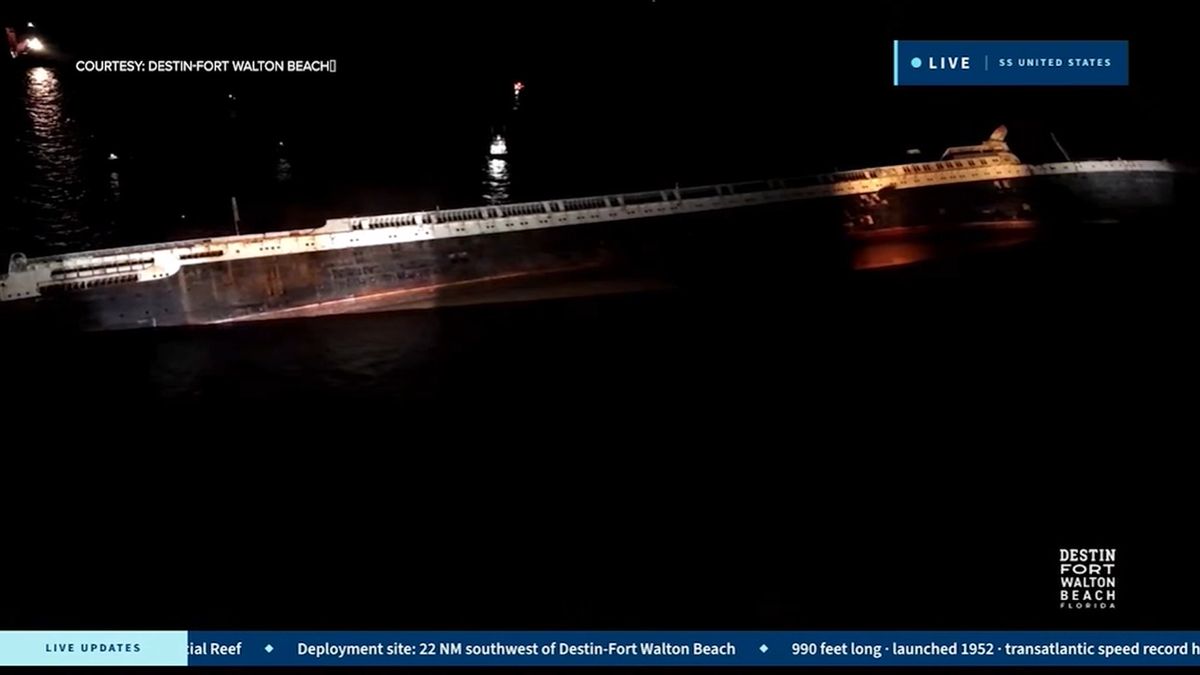
The SS United States, a transatlantic liner once described as the fastest ocean liner in the world, has been sunk off the coast of Destin, Florida, where it will become the world's largest artificial reef. The ship went down on Wednesday, according to reports.
The ship was launched in 1952 and set a transatlantic speed record on its maiden voyage, reports say. It carried passengers between the United States and Europe until it was retired in 1969. Reports say it was longer than the Titanic and that it carried royalty and celebrities, as well as former presidents Harry Truman, Dwight Eisenhower and John Kennedy. A young Bill Clinton, before he became president, also crossed the Atlantic on it.
After retirement, the ship spent nearly 30 years docked in Philadelphia while various owners tried to save and restore it. Activists failed to keep it as a museum, and proposals for a museum or a floating hotel also fell through, according to reports. Reporting says rising costs made preservation harder: in 2021 port authorities raised the daily dockage fee to $1,700, a cost the non-profit SS United States Conservancy could no longer afford. The ship was later moved to Alabama for cleaning and remediation work. In 2024, Okaloosa county bought it for $1m, according to reporting.
On Monday the vessel made its final journey from Alabama to the coast of Destin. Reports say it was sunk in a precision operation without explosives. According to reporting, the ship was hollowed out, with openings cut into its hull so water could enter and bring it down upright. It was deployed at about 2.40pm Eastern Time (20.40 CET) and the sinking began shortly before 5pm Eastern Time. It reached the bottom of the Gulf of Mexico at around 10pm Eastern Time. It rests at a depth of about 180 feet, with its upper decks around 55 feet below the surface.
Officials expect the wreck to become a habitat for red snapper, grouper, amberjack, mackerel and tuna. Reports say it is expected to draw divers from around the world. A land-based museum detailing the ship's history is also planned, according to reports.
Susan Gibbs, president of the conservancy, said she was glad the ship's story would live on. Her grandfather, William Francis Gibbs, designed the liner. Gibbs described the ship as "this unabashedly American symbol" that brings many people together, she told a US news network.