
Spain to ban tear gas for police after charges at 11 November strike
The Interior Ministry says smoke canisters, which it describes as harmless, will remain in use. Police unions warn that the change leaves officers exposed.
By Álvaro Luna, Madrid
2 min read
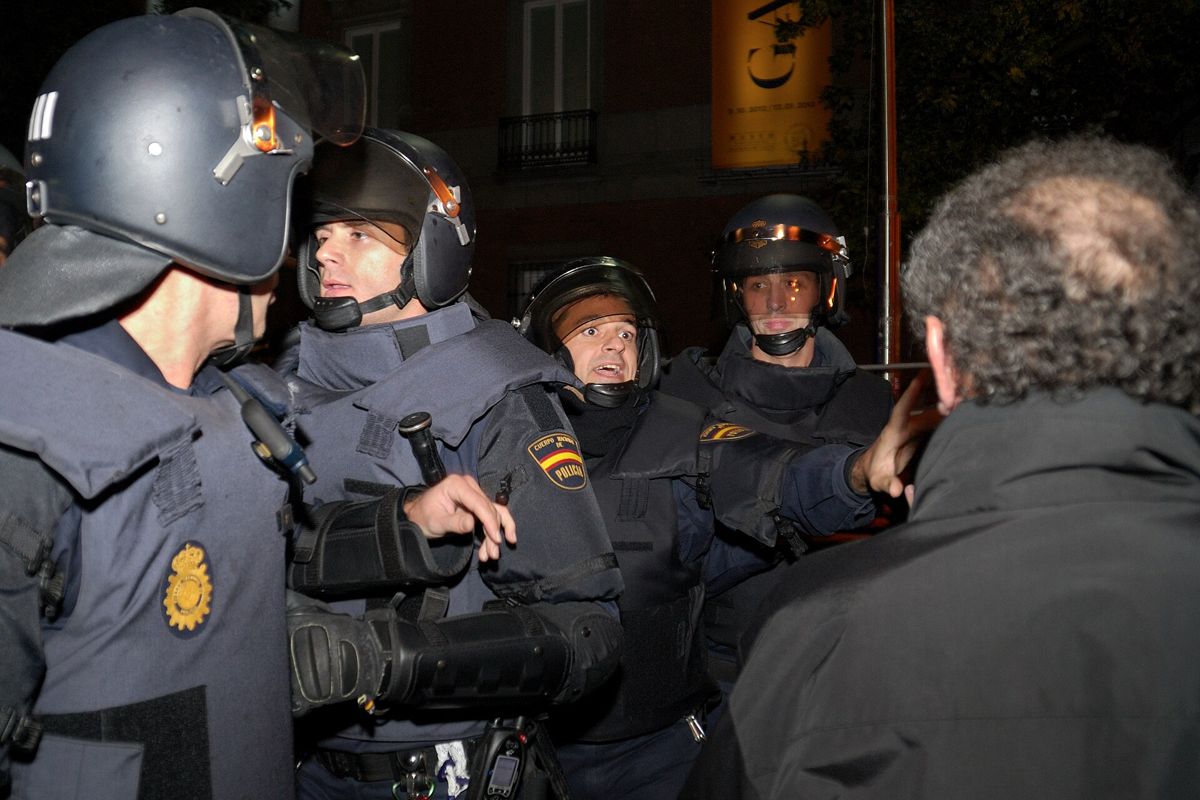
Spain's Interior Ministry has confirmed that it will ban the use of tear gas as a police tool, after police charges during a general strike in Madrid on 11 November. The ministry, which oversees the National Police and the Guardia Civil, said on Friday that it had ordered the National Police's directorate-general to change its internal protocol on crowd control.
The ministry said the National Police will still be able to use ATL devices, canisters that release a cloud of smoke it describes as harmless and non-injurious. Officers also keep other tools for dispersing crowds, including rubber balls and shotguns.
The strike was called by unions to demand better access to housing and higher wages. Before it took place, the ministry ordered the National Police and the Guardia Civil to have enough units ready to prevent what it called "violent pickets" and barricades. Those units were to protect critical infrastructure, industrial estates, central food markets and small shops, according to a 6 October instruction from the State Secretariat that Europa Press says it has seen.
On Thursday, the Madrid police headquarters opened a confidential internal inquiry into how officers acted during the strike. The same day, the Interior Minister, Fernando Grande-Marlaska, spoke to reporters at a Socialist Party (PSOE) event in Madrid ahead of the general election. He said some actions "at first sight, don't go down well and don't fit well with the principles of proportionality". He added that he had ordered a "very specific investigation", separate from the routine reviews police carry out after public order operations.
Marlaska also defended "the legitimate use of force" by the police and the Guardia Civil. He described Spain's citizen-security police as "absolutely exemplary" and cited events such as the Ibero-American Summit, a NATO summit and a UN financing summit. He said he saw no reason to resign, arguing that his job was to defend officers while ensuring that citizens could exercise their rights and freedoms with full guarantees.
Police unions reacted angrily to the change. The police union with the most members among commanders said the decision was "leaving officers sold out and defenceless". Other unions, including SUP, Jupol, UFP and CEP, also criticised it, saying it put officers "under suspicion".
The report does not say when the new protocol will take effect, or what the outcome of the Madrid inquiry will be.