
Two groups verify Anthropic mathematician's claim that Claude helped prove Riemann hypothesis
Levent Alpöge says the AI model Claude helped him develop a solution over about six weeks, and two mathematical organisations say they have checked his proof.
By Jaime IA
2 min read
Two organisations say they have independently verified a proof of the Riemann hypothesis, one of the best-known unsolved problems in mathematics, put forward by a mathematician at the artificial intelligence company Anthropic. According to The Guardian, Levent Alpöge, a Turkish American mathematician, says that Claude, Anthropic's AI model, helped develop the solution over about six weeks.
Alpöge posted a note on his personal website on Friday saying that Claude had helped prove the hypothesis. The Guardian reports that he credited the software for the final stretch of the work, writing that "Claude far outpaced me near the finish line". He linked to computer code written in Lean, a programming language used to check mathematical proofs, which he said could confirm his findings.
On Saturday afternoon, the Lean Focused Research Organization, which promotes the use of Lean, and the Mathlib Initiative, a programme that works with Lean on mathematical equations, announced that they had verified the solution. The two groups said they had full confidence that the proof is correct and congratulated Alpöge. The Guardian's report does not say whether the Clay Mathematics Institute has assessed the proof.
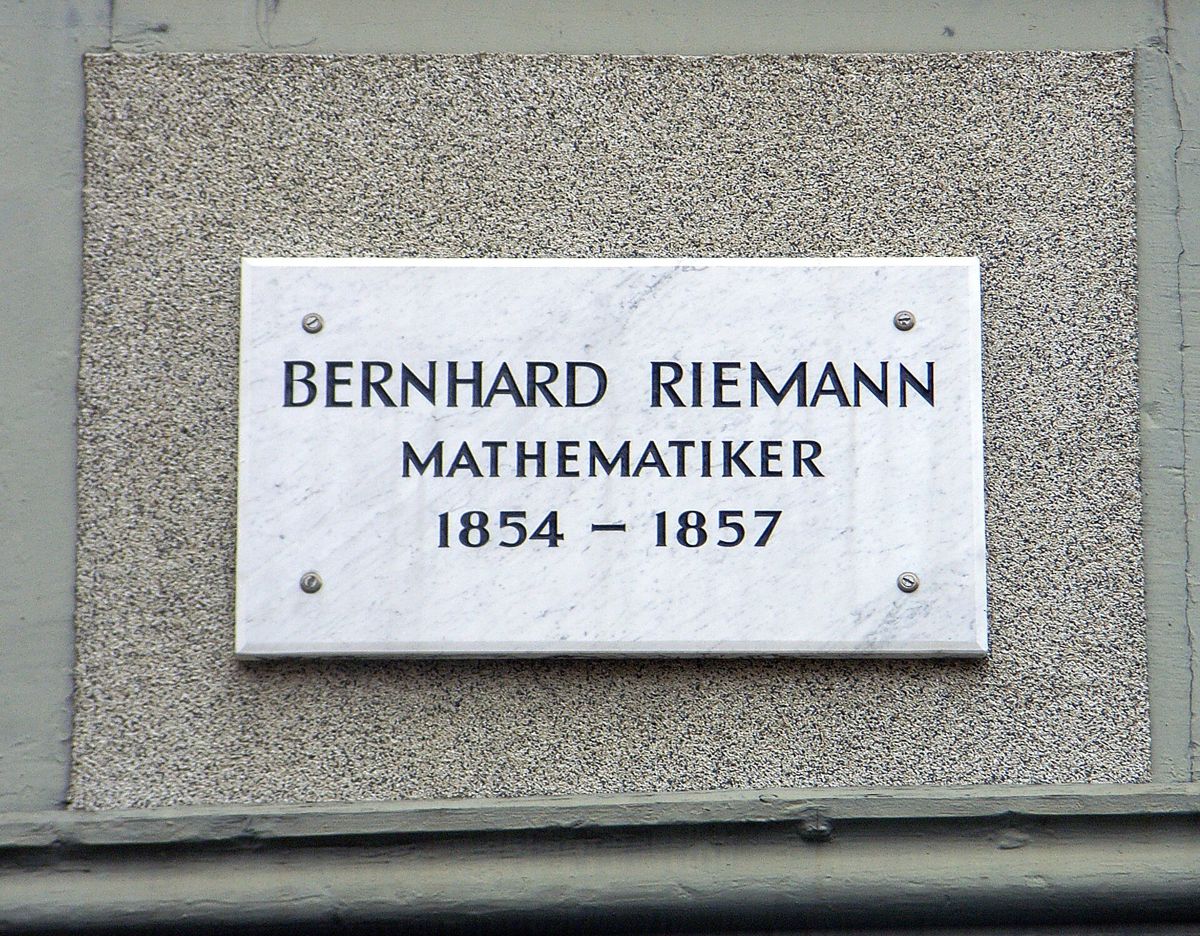
The Riemann hypothesis was proposed in 1859 by the German mathematician Bernhard Riemann. It concerns prime numbers, which are whole numbers greater than 1 that can be divided only by themselves and 1, and how they are distributed along the number line. The Clay Mathematics Institute has named it one of seven Millennium Prize problems and offers $1m for each one solved.
Alpöge's note appeared a day after Anthropic went public on the Nasdaq stock market. He acknowledged the timing was poor and said he would have finished the work earlier if he could.

The announcement comes amid unease among mathematicians about private companies spending large sums on AI to solve problems. In September, OpenAI, a rival company, said a non-public version of its tools had helped solve part of another Millennium problem. The Guardian reports that the effort cost $15m and used 10,000 AI systems. Alpöge was working on that separate problem for Anthropic when OpenAI made its announcement. James Robinson, a mathematician at the University of Warwick, told The Guardian in September that big technology companies were showing off their models at a high environmental cost.
The Guardian also reports, citing The New York Times, that on Friday an independent mathematician in Italy, Alessandro Masullo, released an incomplete proof of the hypothesis that he said he had worked on for almost 12 years. He said he did not use AI because he did not fully trust the system.