
General strike cuts roads in Catalonia and takes Canal Sur off air
Most Spanish ministers have cleared their public agendas, with only Foreign Minister José Manuel Albares and Agriculture Minister Luis Planas still working abroad.
By Álvaro Luna, Madrid
3 min read
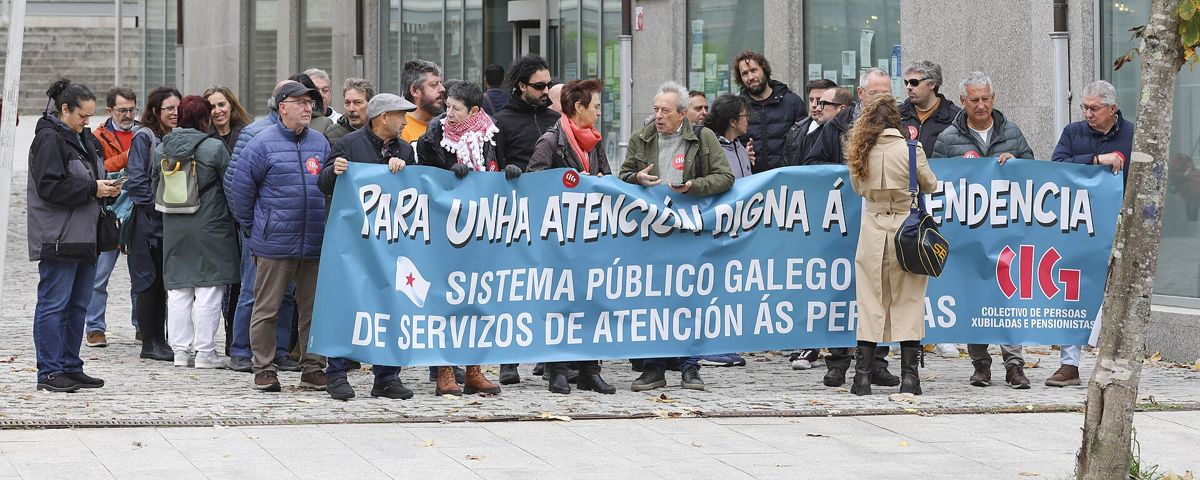
Protests linked to Spain's general strike of 11 November, known as 11N, forced traffic cuts on several major roads in Catalonia early on Wednesday, according to the Directorate-General for Traffic (DGT), the national traffic authority. Around 09.00 CET, the cuts in Barcelona province affected the AP-7 motorway at Subirats and Llinars del Vallès, the C-32 at Cornellà de Llobregat and Mataró, the B-23 at Sant Joan Despí and the C-58 at Sabadell. In Girona, the AP-7 at Sant Gregori and the A-2 at Fornells de la Selva were also affected.
Separately, the DGT said traffic entering Madrid was running at the usual rush-hour level, with notable queues on the A-1 at Las Tablas and the A-6 at Aravaca. Apart from the cuts caused by the protests, the agency reported, the congestion was not out of the ordinary for the time of day. Delays were also reported on the A-7 at Viator in Almería, heading towards Murcia, and around San Pedro Alcántara in Málaga, in both directions.
In Andalusia, Canal Sur Televisión, the regional public broadcaster, cut its output at about 08.20 CET during the morning news programme Despierta Andalucía. The screen went black with a message saying the interruption was a consequence of the strike call and apologising for the inconvenience. The channel had been broadcasting normally since midnight. The strike was called by the trade unions Comisiones Obreras (CCOO) and UGT, together with the tenants' union Sindicato de Inquilinas, and is backed by most unions, which say it defends access to housing and better wages.
The Andalusian Employment department set minimum services for essential public services in a resolution published in the Official Gazette of the Junta de Andalucía (BOJA), the regional government's gazette. For regional radio and television, it says relevant news programming must be guaranteed "in reduced format" (translated from Spanish), with only the strictly necessary staff.
At national level, Prime Minister Pedro Sánchez and most of his deputy prime ministers and ministers had no public events scheduled for the day. The exceptions were Foreign Minister José Manuel Albares and Agriculture, Fisheries and Food Minister Luis Planas. Albares was due to meet European Commissioners Jozef Síkela and Dubravka Šuica in Brussels, then take part from 16.30 CET in a panel at the Paris Peace Forum on building citizen-centred peace architecture for Israel and Palestine. Planas was in Ankara, Turkey, meeting Spanish food companies and food importers, and the Turkish deputy agriculture minister, Ahmet Gümen.
Ministers from both the Socialist party (PSOE) and the Sumar space, the left-wing grouping in the governing coalition, have publicly backed the strike. Government spokesperson Elma Saiz, speaking after the Cabinet meeting, described it as a protest "in favour of the rights of all citizens" (translated from Spanish) and called for respect towards the unions. Social Rights Minister Pablo Bustinduy said he gave the strike "sincere, resounding and absolute support" (translated from Spanish) and urged workers to join it to defend the right to housing.