
Hera images show crater and debris on asteroid hit by Nasa probe
The European Space Agency's Hera spacecraft has captured the aftermath of the 2022 DART impact on Dimorphos, four years after Nasa's test.
By Carmen Pardo
2 min read
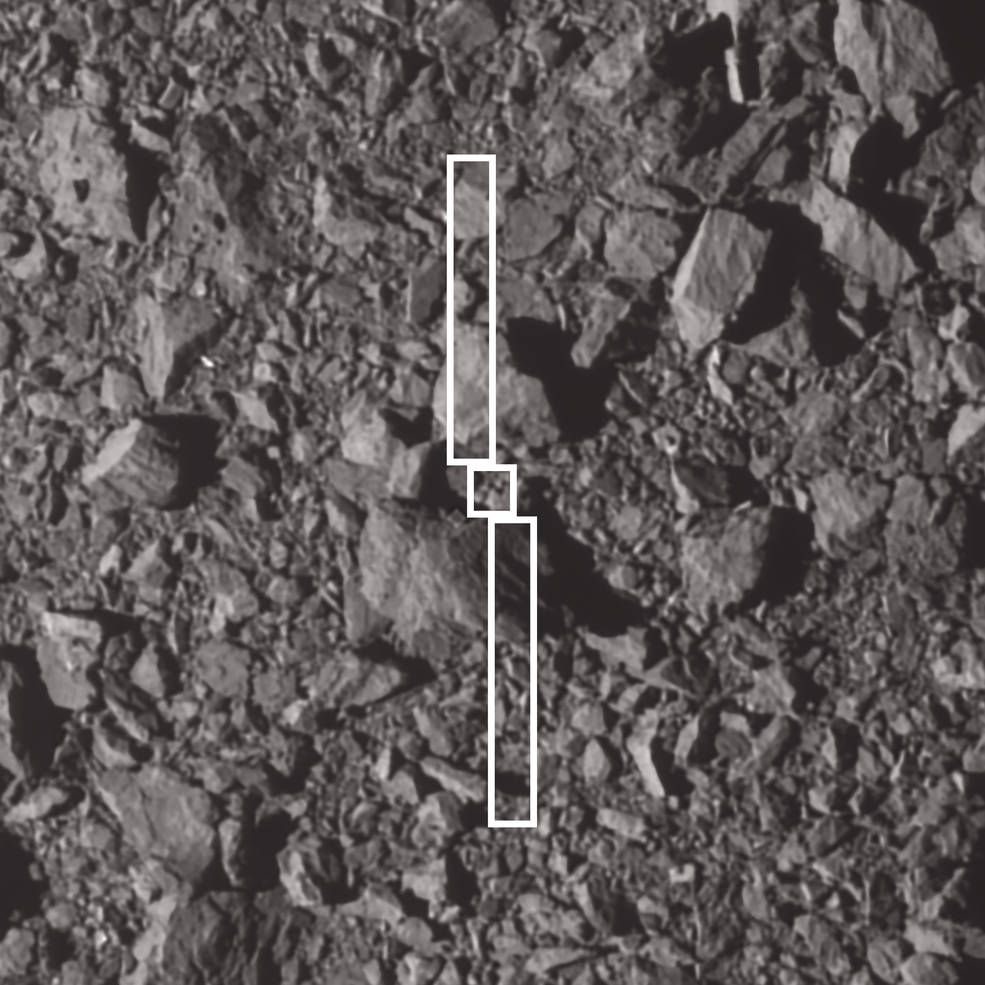
The European Space Agency (ESA) has released the first close-up images of Dimorphos, a small asteroid that Nasa deliberately struck with a spacecraft in 2022. The pictures, taken by ESA's Hera probe, show a large crater on one side of the rock and debris from the impact spread around it.
Nasa's Double Asteroid Redirection Test (DART) was designed to find out whether a spacecraft could nudge a space rock off course, a capability planetary defence would need if an object were ever found heading for Earth. Neither Dimorphos nor its larger companion, Didymos, poses a threat to the planet. The DART spacecraft was destroyed on impact, and observers measured the result: the asteroid's orbit around Didymos had shortened by about 33 minutes.
The new images are the first detailed view of what the collision left behind. Scientists had been unsure how much material had been blasted away. Computer simulations published in 2024 suggested that the impact may have reshaped the whole asteroid rather than carving out one clear crater. Patrick Michel, principal investigator for the Hera mission, said: "It's a huge crater, yet it didn't destroy the object." He added that some features in the middle of the crater remain unexplained.
Estimates of Dimorphos's width vary, from about 150 metres to roughly 160 metres. Michel also said the asteroid's rotation appears to have been significantly disturbed, with the crater visible on alternating sides as it turns.
Hera is now about 30 kilometres from the pair and will move closer over the coming months. Its next step is to release two small satellites, which will study the surface and interior of Dimorphos up close. Michel said the team faces about six months of investigation, with risky operations almost every month. Hera project manager Ian Carnelli described the scene as "complete chaos", noting that the rocks do not behave as expected.
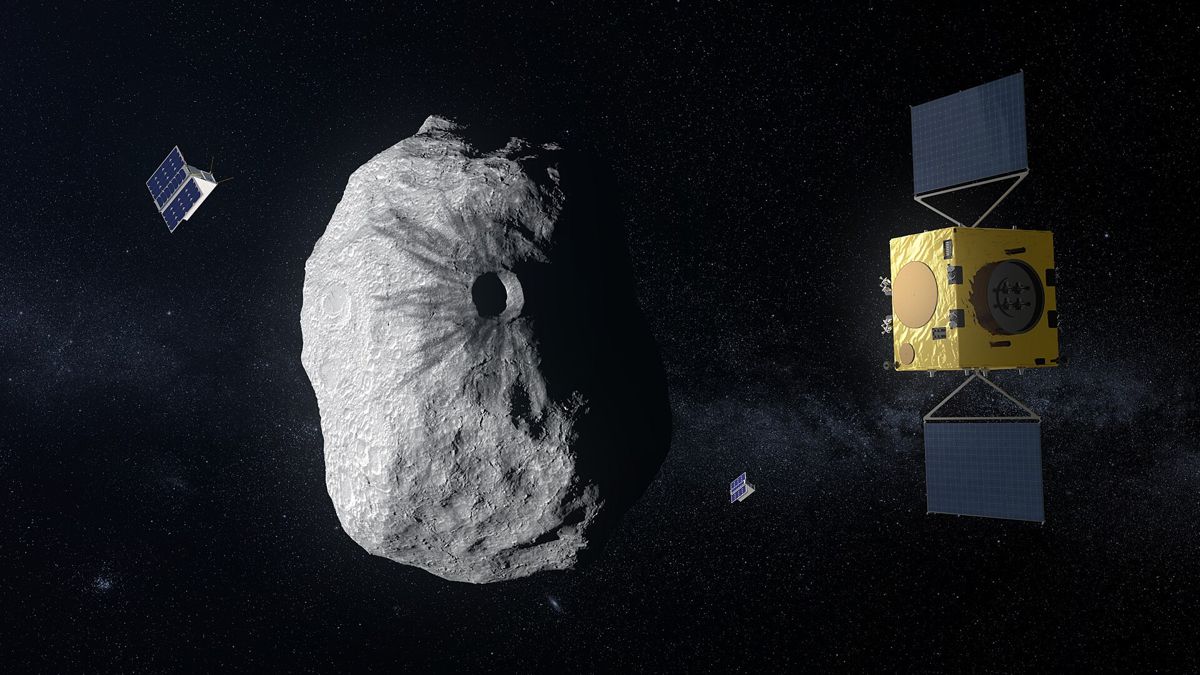
The mission could be extended. Carnelli said the probe still has plenty of propellant and that a two-year journey could take it past two more asteroids before it returns to Didymos. A return would allow scientists to see whether the orbit and rotation have changed further, and whether surface features have shifted or eroded since the impact.
Hera is part of ESA's Space Safety Programme. It will be followed by Ramses, a joint mission between ESA and Japan's space agency (JAXA), which is due to meet the asteroid Apophis when it passes Earth in 2029.