
BepiColombo nears Mercury after eight-year journey
The European-Japanese spacecraft faces a 37-minute braking manoeuvre to enter orbit around the Sun's closest planet, according to the BBC.
By Carmen Pardo
3 min read
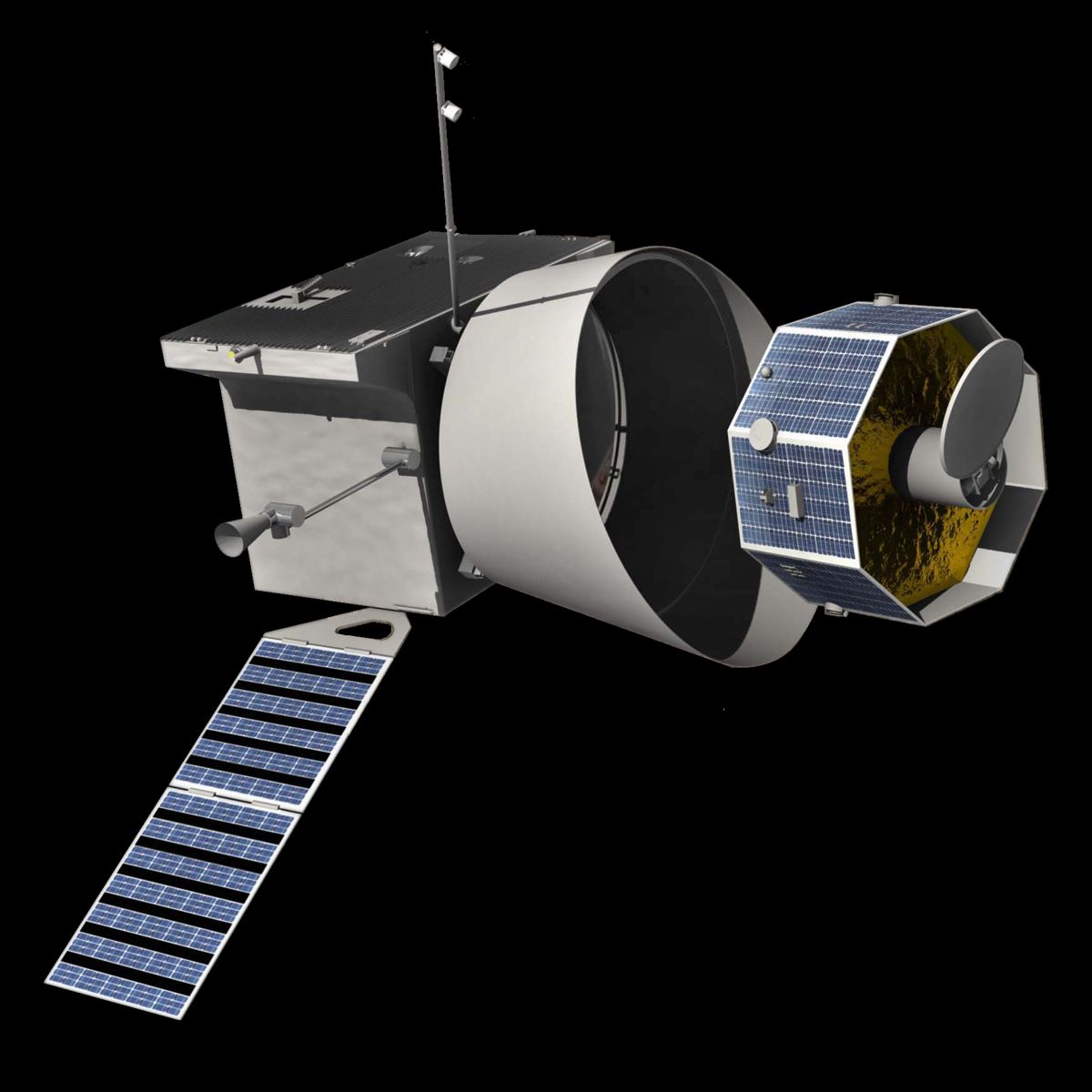
The BepiColombo spacecraft, a joint mission of the European Space Agency (ESA) and Japan's space agency JAXA, is close to its destination after an eight-year journey of almost 10bn km, according to the BBC. Once it enters orbit around Mercury, the closest planet to the Sun, it will become the third spacecraft to visit the planet. The only two earlier visitors were both NASA missions: Mariner 10, which flew past three times in the 1970s, and Messenger, which arrived in 2011 and spent four years in orbit.
The route has been deliberately convoluted. Because the Sun's gravity pulls hard on a craft heading into the inner Solar System, BepiColombo has kept its brakes on for the whole trip. It looped once around Earth, twice around Venus and six times around Mercury to slow down enough to be captured. The BBC reports that a problem with the propulsion system extended the mission by a year, from the seven years originally planned.
The hardest step is still ahead. The final manoeuvre is a 37-minute braking burn that will allow Mercury's gravity to take hold of the craft. If anything goes wrong, the BBC notes, the spacecraft could fly past the planet.
Conditions at Mercury are extreme. Temperatures can reach 430C and drop to -180C, and the planet is constantly bombarded by intense solar radiation. Mercury is only slightly larger than the Moon, and its year lasts 88 Earth days while a single day takes 59, because it rotates very slowly on its axis.
Scientists want answers to several puzzles. Ice survives in some of Mercury's polar craters despite its proximity to the Sun. The planet is also dotted with thousands of shallow hollows with steep sides, which the BBC says are young in planetary terms, at about 100,000 years old. Researchers know they are not impact craters, but they are not sure how they formed. Finally, Mercury has a very large metal core for its size. Prof Emma Bunce of Leicester University, a principal investigator on the mission, told the BBC: "I think it's a little bit of an under-loved planet in the inner Solar System." She said one explanation is that a large collision stripped away the mantle, while another is that the planet formed with more metal from the start.
The mission carries two orbiters. ESA's craft will study the surface up close, while JAXA's will observe the planet from a distance. Before that can happen, the two must separate after being locked together for launch and eight years of travel. Jessica Marshall, a systems engineer at Airbus, which built the spacecraft, described the separation mechanism to the BBC. It is a spring system that has been exposed to radiation and large temperature swings, and it also twists to set the released craft spinning. A life-size model of BepiColombo is on display at the Science Museum in London, where it was used to test the craft during assembly.