
Oxfam says war has left Gaza contaminated across the territory, with health risks for decades
A report by Oxfam and a UK-based research group describes Gaza as a "toxic wasteland" and warns of long-term risks from sewage, debris and explosive residues.
2 min read
A new report by the aid agency Oxfam and the UK-based Conflict and Environment Observatory (CEOBS) concludes that three years of war have left contamination across the Gaza Strip, the Palestinian territory on the eastern Mediterranean. Oxfam describes the territory as a "toxic wasteland" and says the damage poses risks to public health for decades.
The researchers used satellite imagery, remote sensing, spatial analysis and other open-source data. They identify heavy metals, explosive residues, asbestos from destroyed buildings, dioxins and biological contaminants in the air, soil and water supply. Oxfam presents the findings as the most comprehensive assessment so far of the environmental impact of the war, which began after the Palestinian militant group Hamas attacked southern Israel on 7 October 2023.
Amitabh Behar, Oxfam International's executive director, said Israel's ongoing military campaign amounted to "environmental war crimes" and formed part of what he described as a genocide in Gaza. Israel rejects genocide accusations. It has told the International Court of Justice, the United Nations' top court, that the claims are baseless, and it says its operations are self-defence against Hamas. Israel's government was asked to respond to the report.
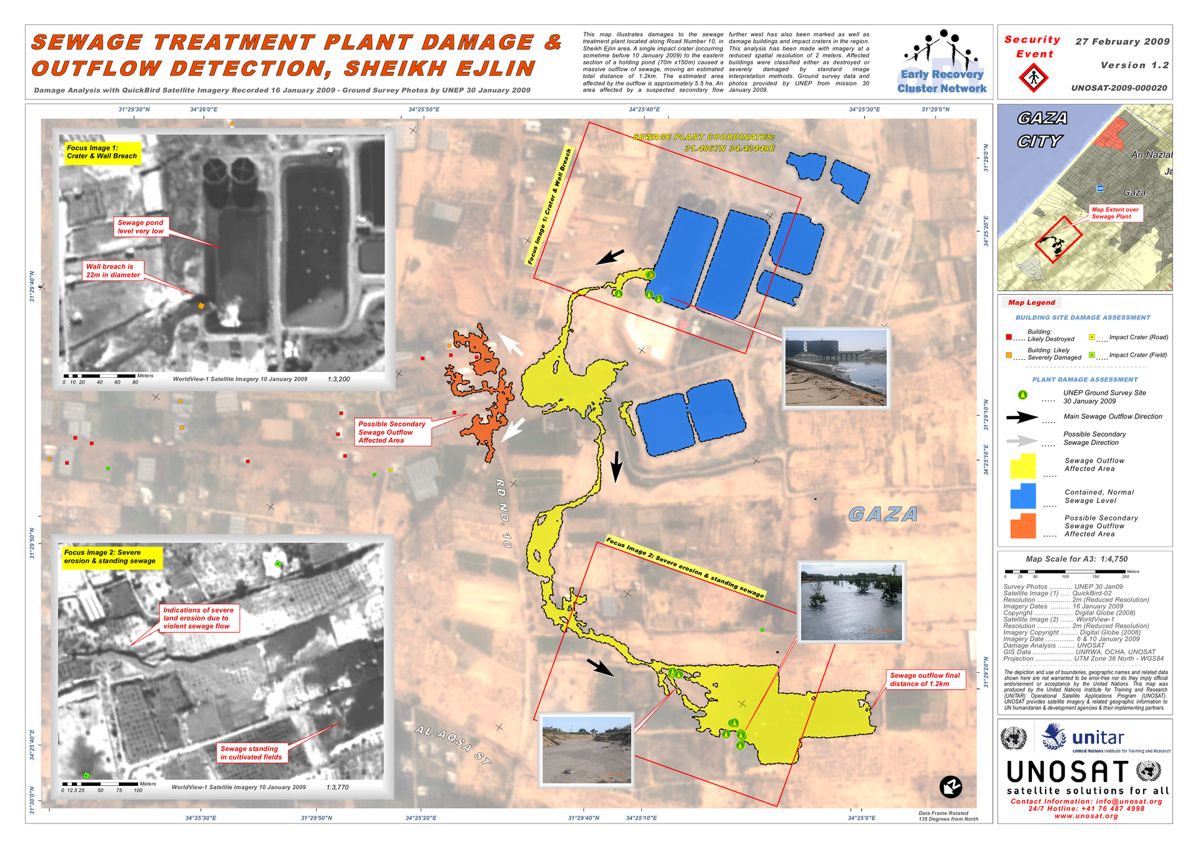
The UN Environment Programme (UNEP) estimates that Israeli military operations have generated more than 61m tonnes of debris across the territory. Oxfam says that rubble, along with unexploded ordnance, limits safe access to most areas and makes clean-up difficult. The report also says that raw sewage is flowing into the sea and into the ground, and that the destruction of Gaza's sanitation systems leaves residents with little protection.
The report calls for a full independent environmental assessment on the ground, which it says is needed to identify contamination risks before any clean-up or reconstruction begins. The Hamas-run health ministry, whose figures the UN considers reliable, says at least 74,746 Palestinians have been killed since the start of the war.
The Israeli embassy in the UK questioned the report's methodology and said its reliance on satellite imagery and unverified assumptions "falls short of professional standards". The embassy also said the report failed to examine tunnel excavation, which Hamas has claimed extends more than 500 km beneath Gaza. Oxfam's authors argue that environmental recovery must run alongside reconstruction, rather than after it.